It Was My Fault
You Do Not Have to Carry Your Story Alone
The responsibility for the abuse belongs to the person who abused us—not to us. In safe community, the lie that it was my fault can begin to lose its power.
He shared that his interest in receiving care for the sexual trauma he experienced as a boy kept growing once he heard there was a place where he could tell his story.
“I have always wanted to share my story but never felt safe really sharing it because of the recurring thoughts of what people would think of me.”
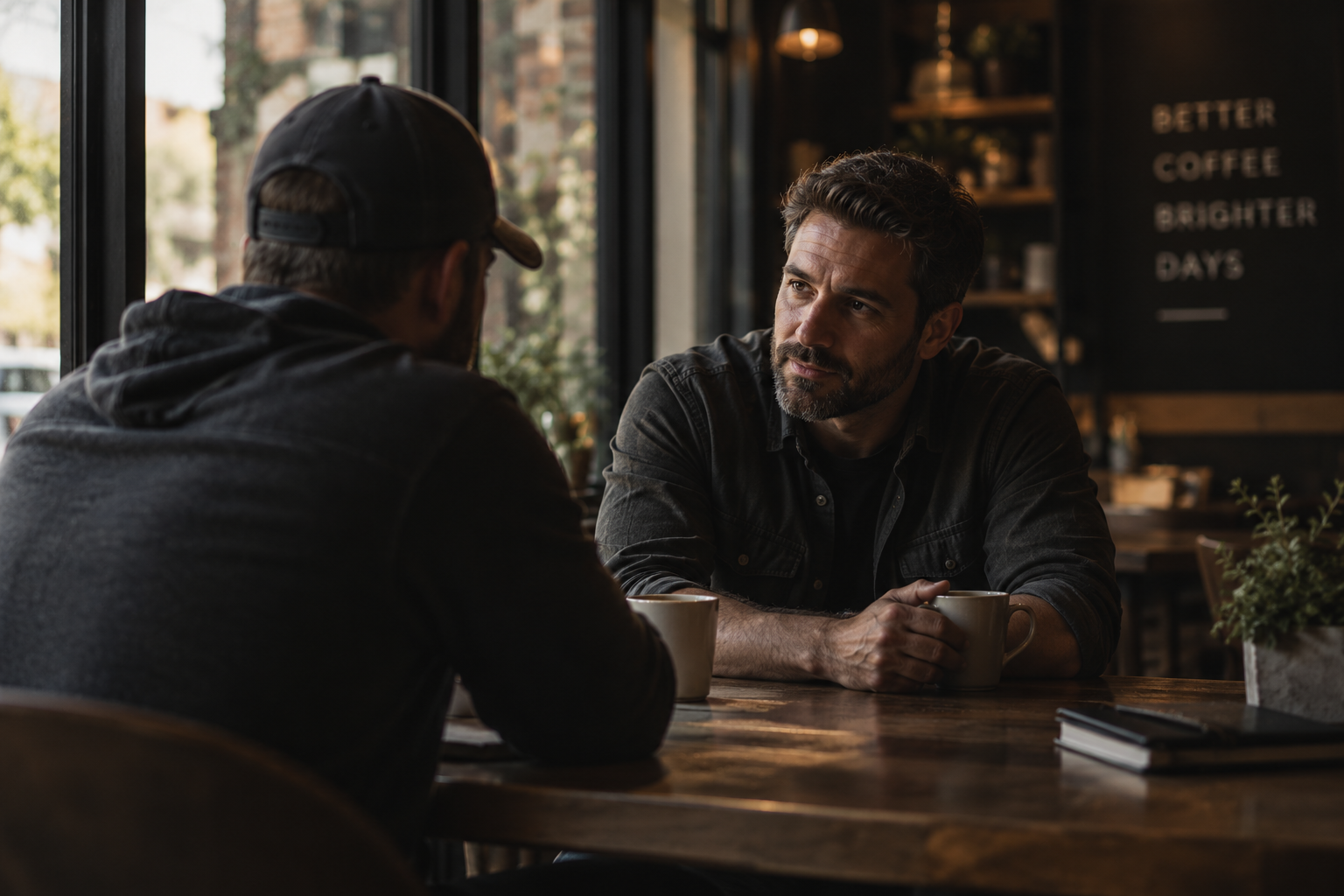
“Well, how can this time and space serve you now?”
There was a long pause. We sat in the silence. It didn’t feel awkward, but it was noticeably still. I asked, “Have you heard my story?”
“I have heard parts of it and read a couple of your blogs, but it may help to hear some of it firsthand.”
I shared for about ten minutes, and once again we came to a noticeable pause. This time, the silence felt a little different. Without either of us saying anything, we both knew it was his turn to speak. The silence continued, carrying a bit of weight.
Then he blurted out, “It was my fault.”
The eruption of words had energy to it, as if he had been holding a ball underwater and it had suddenly burst to the surface.
“What was your fault?” I asked.
“My abuse was my fault. All of it was my fault.”
“Who told you that it was your fault?”
A long pause followed. “Well, no one told me that directly, but I felt it strongly from the one who abused me.”
Tears fell with those words.
“I have always known that it was my fault—my abuse and me. I always felt ‘wrong’ after the fact. It was always present with me, even when the abuse didn’t happen for a while.”
“Do you feel wrong now, telling me this part of your story?”
Another pause. Tears continued to fall.
“Actually, I don’t notice it. I have to think about it to feel it. But it doesn’t feel real while I’m saying this to you and sharing my story.”
“Interesting, huh?” I said. Then, after a slight pause, I added a bit of a twist. “Why do you call the abuse ‘my abuse’?”
“Well, isn’t it my abuse? Isn’t it what happened to me?”
I could feel his defensiveness here, along with his anger.
“My thought is that what happened to you wasn’t something you possessed or created. Yes, it happened to you, and it is part of your story. But it was something that was done to you as a little boy. It wasn’t yours because you caused it. It was something someone else did to you.”
I gently asked, “Could this be part of the reason you have carried the belief that it was your fault?”
A much longer silence set in as he wept.
“Could it be that you didn’t feel that same wrongness while telling me because you were in the presence of someone whose story is similar to yours? You had heard or read enough of my story that somehow you knew I understood something of what this feels like too?”
Common Unity
Community is a place where similar stories can be shared with one another as we follow the same Jesus. There is no pretense here, no hoops to jump through, no agenda to follow. When we begin to hear stories much like our own, we are able to breathe and begin to ease into a place of rest.
When our bodies don’t feel safe, when we live in pretense or a constant state of fight or flight, our bodies don’t truly rest. But when we experience community as a place of safety, our bodies can begin to relax. We can begin to rest. And in that safety, we can begin to heal.
Abuse happens when another person violates us. It is done to us; therefore, it is not our fault. For whatever reason, we were not protected, looked after, or given a voice as boys. But the responsibility for the abuse belongs to the person who abused us—not to us.
Healing happens with others. When we feel safe, we engage. We share our stories when we are ready. We discover that we are not alone, and we begin to recognize that we are not wrong.
This honesty, this safety, and the awareness that we no longer have to carry our stories alone can begin to free us to see God, ourselves, and others differently. We can begin to release the responsibility we have carried for someone else’s actions. The mantra in our minds that has lied to us—It was my fault—can begin to lose its power.
A community of brothers strengthens us to stand on new, stable, healing ground. From there, we can begin to live differently and live free. We need Christ to heal, and we need one another to heal.
That is part of the heart behind Renew, the men’s healing study at Trees of Hope. Renew was created specifically for men who have experienced sexual abuse and are ready to begin bringing what has been carried in silence into a safe, Christ-centered community.
You do not have to carry your story alone. If you are ready to learn more about Renew and what taking a step toward healing could look like.
I invite you to come on this courageous journey into healing with Trees of Hope and with the men who have gone before you. You are welcome here.